











Tom Watson, Deputy Leader of the Labor Party, in early 2019 again installed a debate on the agenda of British society and politics since technology redirected the betting industry. Watson, who has already proposed a series of measures cracking down on the wider gambling industry, will describe the Gambling Act 2005, passed under Tony Blair’s government, as “unfit for the digital age”.
The discussion deepened when the Islands market marked a break in the historical structure. October 2017 to September 2018, saw the GGY, OR Gross Gambling Yield, of the UK’s gambling industry hit a staggering £ 14.5bn. Gambling enterprises are required to pay the UK government a minimum of 15% tax on any amount up to £ 2,370,500. The tax then increases accordingly to 20%, 30%, 40% and 50%. At that time, thanks to these astonishing numbers, the gambling industry has cemented its place as one of the UK’s largest and most profitable industries.
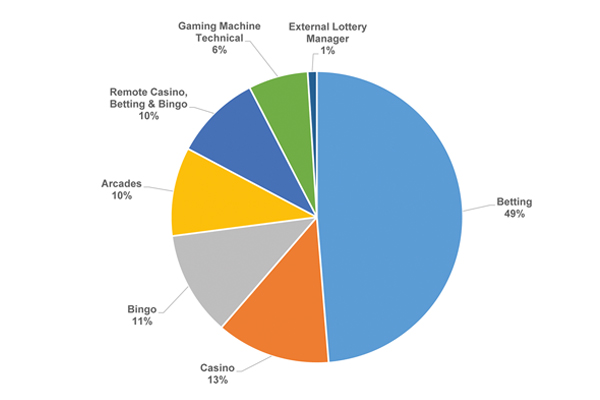
The story was already changing, but it deepened even more since that period. The UK gambling sector can be divided into a number of different areas, namely; online gambling, betting shops, bingo halls, land-based casinos, arcades and lotteries. Of these, online (or remote) gambling – which includes online betting, online casino games, online bingo and online lotteries – is responsible for the lion’s share of the profits; 39% or £ 5.6bn GGY. Land-based bookies come in second at 22.1% and the National Lottery follows closely at 20.6%. Traditional casinos rake in 7.4% and old-school bingo halls are responsible for 4.7%. 2017-2018 saw a slight downturn in overall profits compared to the previous years. However, as a registered trademark, the numbers still indicate that the UK’s love of gambling remains strong and true.
UK FISCAL YEAR: DOWN, BUT STILL STRONG
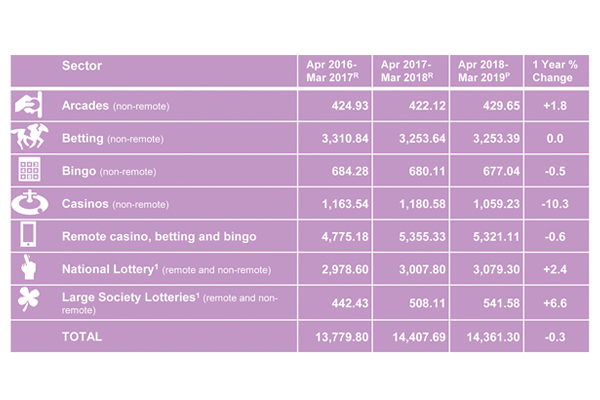
In the UK the financial year began on April 1, 2018, and runs until March 31, 2019, for the purposes of government working out their finances. About this period, based on a report released by the UK Gambling Commission, online gambling in the UK still generates an enormous amount of revenue. Remote (or online) gambling is the largest sector by GGY. With £5.3bn GGY, it comprises 37.1% of the overall market. Remote sector GGY decreased for the first time this year, by £34.2m (-0.6%). Online casino games dominate the sector, generating £3.1bn in GGY, mostly from slots games.
GGY for remote betting totalled £2.0bn. Most of the betting decline came courtesy of the horseracing segment, which saw GGY fall 15% to £522m. Football GGY was down a comparatively modest 4.4% to £991m while virtual sports GGY slid 12.5% to £68.6m. Exchange betting, which isn’t included in the overall betting stat, saw GGY slip 1.4% to £166.4m.
The historical and traditional sector in the market of the islands also continues to be important. Non-remote betting GGY remained stable and was the second largest sector by GGY with £3.2bn. GGY for oncourse activities increased, while off-course and pool betting decreased. Within off-course data, machines GGY decreased for the first time in 10 years, by £2.1m. Machines represented 57.8% of total off-course GGY. Total betting premises have continued to decline for the fifth consecutive reporting period to 8,320.
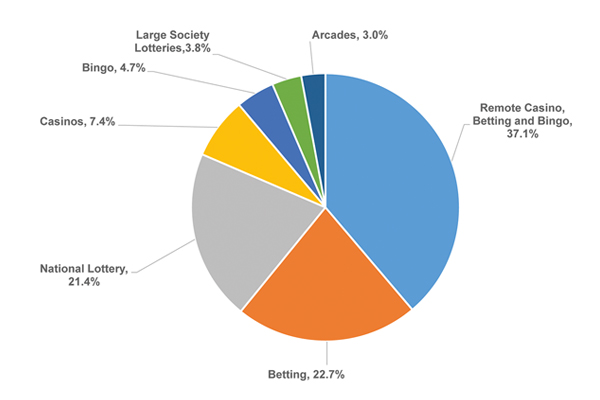
National Lottery will be in the bidding process by 2020. Meanwhile, in the fiscal year ticket sales increased by £271.6m to £7.2bn. This supported a GGY equivalent increase of £71.6m, to £3.1bn, making the National Lottery the third largest sector by GGY. Over the same period, the primary contribution to good causes decreased by £21.9m to £1.5bn. Large society lotteries, which traditionally have the smallest market share along with arcades, saw a GGY equivalent increase to £541.6m (+6.6%), with balance to good causes at £332.2m, a £32.9m increase from the last reporting period. This is the highest contribution figure reported to date.
The non-remote casino sector saw a decrease of £121.4m (-10.3%) in casino GGY, to £1.6bn. This was led by decreases in GGY from casino games (-13.4%), predominantly punto banco and American roulette. GGY from casino-based machines increased (+3.9%). Non-remote bingo GGY decreased slightly to £677.0m (-0.5%).
In the arcades sector, adult gaming centres showed a slight increase in GGY, reporting £379.3m (+3.2%). GGY for licensed family entertainment centres decreased, reporting £50.4m (-8.0%). Note that this data does not include unlicensed family entertainment centres which operate using a permit from a local authority.
Machines GGY over the last year to March 2019 increased in all sectors except betting and family entertainment centres. GGY increased in all machine categories, except B2 and D. Across all sectors, GGY from Category B2 machines decreased by £517.4m to £1.2bn (-30.6%) but it was still the highest machine category for GGY. It was closely followed by category B3 machines which have increased by £518.0m to £1.1bn (+91.0%).
Note that the change in regulations reducing maximum stakes from £100 to £2 for Category B2 machines did no take effect until April 2019, after the reporting period of this publication. The number of licensed activities has decreased by 3.4% to 3,655. These are held by 2,690 operators (-4.6%). The number of licensed gambling premises in Great Britain has fallen to 10,761 (-3.2%).
How to calculate your gross gambling yield (GGY). The annual gross gambling yield is calculated in accordance with the following formula: A + B – C. A) is the total of any amounts that will be paid to the licensee by way of stakes in the relevant period in connection with the activities authorised by the licence. B) is the total of any amounts (exclusive of value added tax) that will otherwise accrue to the licensee in the relevant period directly in connection with the activities authorised by the licence. C) is the total of any amounts that will be deducted by the licensee in respect of the provision of prizes or winnings in the relevant period in connection with the activities authorised by the licence.
During the period April 2018 to March 2019, the regulated gambling industry in Great Britain generated a gross gambling yield (GGY) or equivalent1of £14.4bn, a 0.3% decrease compared with the previous reporting period.
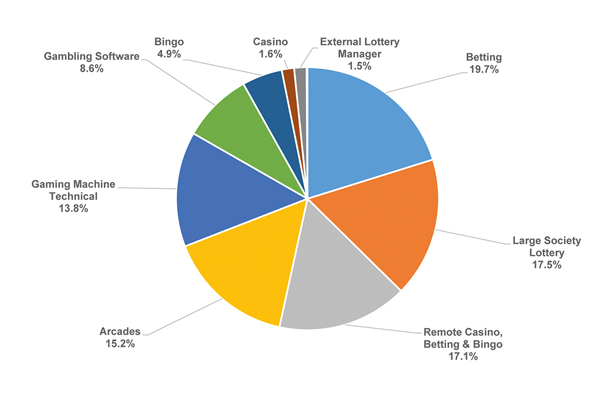
As at March 2019 there were a total of 2,690 operators licensed by the Gambling Commission compared with 2,819 (-4.6%) at March 2018, 338 of which operate across more than one sector. Across Great Britain, there were 10,761 gambling premises used by licensed operators in March 2019, compared with 11,115 (-3.2%) at March 2018
Between them, those operators held licences (remote and/or non-remote) that entitled them to conduct 3,656 activities compared with 3,782 (-3.4%) at March 2018. Licensees have paid a combined figure of £19,600,233 in settlements and penalties this year with a further £6,541,188 being divested back to impacted parties and good causes.
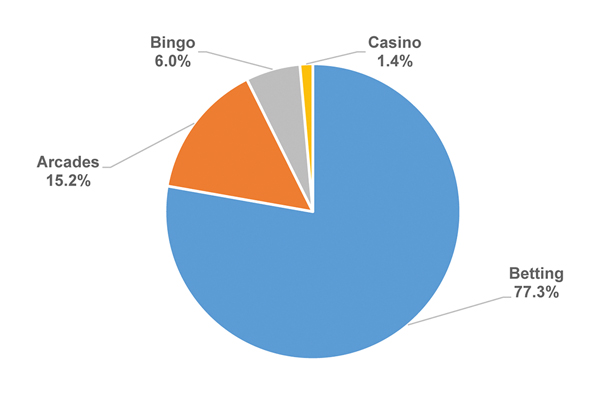
Across Great Britain, there were 10,761 gambling premises used by licensed operators in March 2019, compared with 11,115 (-3.2%) at March 2018. In addition to premises used by licensed operators, there were 51,541 premises where gambling is permitted and controlled by licensing authorities. In reliance of their licensed activities, operators as at March 2019 reported 102,782 people employed, compared with 108,820 (-5.5%) at March 2018.
A new report shows that more than 1,000 betting shops across the UK have closed since restrictions were placed on fixed-odds betting terminals (FOBTs) in April 2019. This works out to an average of four betting shop closures per day. Of the 1,037 stores to shut down, 700 were William Hill outlets, 198 belonged to Ladbrokes Coral, and Betfred accounted for 70 shops. Scotbet, previously the leading independent bookmaker in Scotland, has been in receivership since July. The receivers of Scotbet have kept 30 of the 41 betting shops open.
In January of this year, Irish bookmaker BoyleSports has bought 35 William Hill betting shops, mostly based in Northern Ireland, for an unspecified amount as the independent retailer is looking to expand their assets. BoyleSports is estimated to have charged between £ 10 m and £ 15 m for William Hill’s 33 betting shops across Northern Ireland as well as two shops in the Isle of Man. This has been the biggest purchase by BoyleSports to date and makes the company the largest betting store operator in Ireland.
ABOUT CASINOS
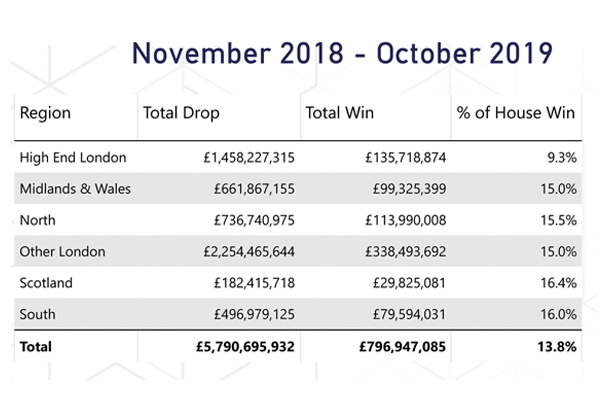
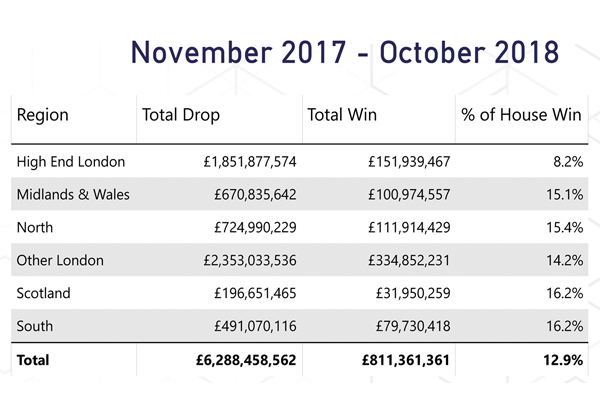
Land-based casinos were the sector that was hardest hit, with year-on-year revenues declining from £1.18 billion to £1.06 billion, a decrease of over 10 percent. During the reported period, GGR for London casinos fell from £243 million to £167 million. One casino, Les Ambassadeurs, accounted for almost 90 percent of this drop. The rest of London’s non-VIP casinos saw a 13 percent decline in GGR during the year being reported.
By contrast, all of the other regions, except the South, saw only single-digit percentage drops for land-based casinos. The Southern region saw GGR increase by 5 percent to £82 million.
Total remote gambling GGR (casino, betting, and bingo) for the UK experienced a very slight decrease, down 0.6 percent to £5.32 billion. Remote betting declined 10 percent to just over £2 billion and remote casino GGR was up over £100 million to £3.1 billion. Almost 70% of online casino revenues comes from slot games, which have no limits on stakes or prizes, whereas similar games in land-based casinos are limited in number to 20 per venue and a maximum prize of £10,000.
The retail betting business was almost static, up 0.1 percent at £1.3 billion, which was offset by a similar decline in GGR from the machines in these venues (FOBTs or B2 machines and B3 machines), down 0.1 percent to £1.8 billion. It must be noted that the reduction in the maximum stake to £2 took effect in the period after this report, so it will be interesting to see, in UKGC’s next report, how machine numbers and revenues have been impacted.
Casino Participation: The summary is based on data gathered from 141 of 151 operating casinos, on a voluntary basis
MORE THAN HALF OF ADULTS IN TOUCH
On a report published in April by the National Health System, 53 percent of adults had participated in some form of gambling activity during the previous 12 months. When the National Lottery is excluded, the figures show 39 percent of adults gambling – including 56 percent of men aged between 25 and 34.
The number is strange considering the tradition that the British have for the bets and the wide offer that exists in the market. Nor is it striking going to the depth of the stage. In total, 29 percent of men aged 25 to 34 reported having participated in online gambling in the previous 12 months, compared with four percent of those aged 65 and over. Across all ages, 15 percent of men had participated in online gambling in the previous 12 months, compared with 4 percent of women. Also, men aged 16 to 24 were the most likely to be classed as problem gamblers, with rates of 1.9 percent, compared with 0.4 percent of the general population.
The time has changed. Now access to bets is increasingly available to people. In fact, experts said the Health Survey of England, which polls 10,000 adults and children on their lifestyles, shows smartphone betting holding an increasing grip on younger generations. Changes in consumer behaviour: more than 50% of consumers now gamble online and we have seen a shift towards mobile use over PC or tablet use, with 44% of consumers gambling via their mobile phones, according Gambling Commission.
The rates have been falling in recent years. In 2016, the Gambling Commission reported that 56% of adults aged 16 or older gambled, while 62% had done so the previous year. In 2012, the first year the issue was covered by the Health Survey for England, 68% of men and 61% of women participated in a gambling activity.
DENIS COATES AT THE TOP
The 52-year-old multibillionaire founder and CEO of Bet365 Group received £323m in salary and dividends, according to a filing from the British online bookmaker, confirming her position as the UK’s best paid executive. Bet365 made a profit before tax of £791m in the year, compared with £661m the year before.
Her salary of 276.6 million pounds from the closely held firm makes her one of the world’s best-paid bosses. It also strengthens her status as the U.K.’s richest woman, adding to a fortune already among the world’s 500 largest, according to the Bloomberg Billionaires Index.
Coates’s net worth is set to increase to more than $5bn through her majority stake in Bet365, according to the Bloomberg index. Along with Bet365, Coates and her family also own Stoke City Football Club. She is the only woman among the 16 UK-based billionaires in the ranking, which includes Virgin Group founder Richard Branson and Joe Lewis, owner of Tottenham Hotspur Football Club.