




















Sports betting is a reality. It is a broad, universal and successful business. What is also a reality is the need for states to limit the actions of operators so that the link between the business and its clients works harmoniously.
Currently, all regions are working to adjust the structure to an always difficult ideal. In some cases a legal point was achieved. In others it is in process. And there are also scenarios with strong arguments for moving forward. Below are some cases in detail in this present of changes.
CANADA
Two Senators introduced a bill, S-269, to create a national framework for advertising on sports betting in Canada. Both sponsors, Sen. Marty Deacon and Sen. Brent Cotter, supported the legalization of single-event sports wagering in 2021.
Advocates and academics have raised concerns about the inundation of sports betting advertising seen in the province since Ontario opened up to independent online gambling sites last year, and decried the impact those advertisements could have on the health of young people.
Bill S-269 would create a framework very similar to the one developed to curb tobacco advertising in Canada. It also pointed to sports betting ad regulations being developed by several European countries including Spain, the UK and Belgium.
Some of the rules proposed in the bill include: limiting or banning celebrities and athletes from appearing in ads; limiting the number of ads that can be played or shown in a specific location; restricting the use of non-broadcast advertising; and establishing national standards for the prevention and diagnosis of gambling addiction.
The Alcohol and Gaming Commission of Ontario (AGCO) announced it updated the Registrar’s Standards for Internet Gaming to prohibit the use of athletes and said new restrictions will come into effect Feb. 28, 2024.
Hockey legend Wayne Gretzky and current NHL stars Connor McDavid and Auston Matthews are among the athletes who have appeared in ads for gambling sites. Ontario regulators allowed the commercial iGaming market to open in April 2022. From the beginning, sportsbooks could not advertise promotional offers without customers first opting in to receive them.
The AGCO was quick to levy fines against multiple operators who broke that rule. The lack of promotional advertising might have hindered the pace at which Ontario operators got up to speed, especially those new to the province and unable to transfer databases from the gray market.
The first year in Ontario attracted $26.5 billion in total wagers, including iCasino and sports betting. The fourth quarter brought in $10.6 billion in bets, compared to $3.1 billion during the first quarter. In April, the AGCO held consultations on its proposal for the ban and received submissions from a host of stakeholders, including mental-health organizations, gambling experts, gaming operations and the public.
In its report, the AGCO said its proposal “comes after significant criticism from advocates, experts and parents about the notable rise of online gambling advertisements, especially during live sports. “For example, during a 2023 playoff series game between the Toronto Maple Leafs and the Florida Panthers, nearly eight and a half minutes of advertisements were dedicated to online sport gambling.”
UK
The project was ready and things were on track. The Betting and Gaming Council (BGC), the state body that regulates betting and gambling in the UK, introduced extensions to the already existing rules to ensure the current restrictions are effectively working in the digital sphere as well as TV and radio. There has already been a demand for 20% of gambling commercials and advertisements on TV and radio devoted to responsible gambling messages. But it’s not done yet.
The UK government’s recent decision to cancel a upcoming ban on gambling advertising recently came under intense scrutiny. During a fiery parliamentary meeting on the subject, it became apparent that there is still no consensus regarding the best course of action.
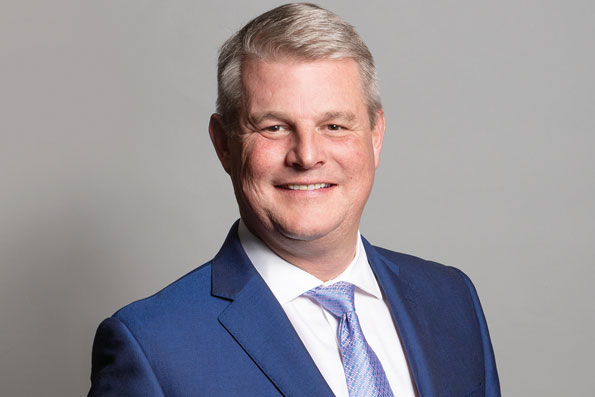
The biggest opposition voice was that of Stuart Andrew. UK’s Parliamentary Under-Secretary of State for Sport, Tourism, Heritage and Civil Society stated that they had heavily relied on the available evidence and pointed out that there was limited proof suggesting that exposure to advertising alone led individuals to be affected by gambling harm. He also mentioned that if further investigation provided additional evidence indicating that advertising was causing harm, it would be considered for action.
The government assessment was disputed by one leading expert on gambling harms. “The evidence is clear that gambling advertising drives consumption, which increases harm,” said Dr Matt Gaskell, a consulting psychologist who runs the NHS’s northern gambling service.
But contributions on limiting sports betting advertising come from a long time ago and from countless sources. One overarching assessment of research into gambling advertising, published in the journal Public Health in February, called for advertising restrictions. While researchers acknowledged “significant limitations” in the evidence base, they found: “In the absence of definitive controlled studies, the substantial and consistent evidence base supports restrictions to reduce exposure to gambling advertising.”
Obviously the debate is very deep, even beyond the field of health. The demands of broadcasters that make substantial revenues from gambling advertising are understood to be one factor influencing government thinking in what Andrew acknowledged was “a very difficult debate at times.” The government, meanwhile, points to plans to limit direct marketing to gambling customers and a voluntary ban on front-of-shirt sponsorship undertaken by the Premier League as signs that clubs are responding to the problem.
AUSTRALIA
The federal government is being urged to ban gambling advertising during sporting events within three years, as the nation grapples with a crisis threatening the financial and mental health of many Australians.
The committee inquiry was initially set up last September after a referral from Amanda Rishworth, the country’s social services minister. Australian prime minister Anthony Albanese labelled betting advertising during sports matches as “annoying”, while other opposing MPs have also called for stronger action.
As of now, gambling advertisements are not allowed to be aired within five minutes of a sporting event starting or finishing, with some exceptions permitted during longer-form events taking place after 8.30 pm such as cricket or tennis matches. Commercial broadcasters have previously warned that free sports broadcasts could be cut if a ban was implemented, while several bookmakers have called the recommended ban an overreaction.
A parliamentary committee has released the findings of its inquiry into the harm posed by online gambling, making 31 recommendations on how the industry should be regulated and how Australians struggling with addiction should be supported.
Committee recommended a phased ban to be implemented in four steps. Committee chair Peta Murphy said a three-year timeline would allow “major sports and broadcasters time to find alternative advertisers and sponsors”. Australian federal government called on to implement a national strategy on online gambling harm reduction. National regulation, online gambling regulator, and harm reduction levy on online wagering providers were among the measures recommended. Bans on illegal gambling websites and stronger identity checks among other steps suggested
“People don’t like it — they feel they’re inundated with advertising, they are very concerned that children are exposed and exposed regularly to ads for sports betting,” committee chair and Labor MP Peta Murphy said. “There’s a concern that we are producing, if we haven’t already produced, another generation of Australians who see sport and betting as intrinsically linked, and sport almost as a vehicle for which betting can occur.”
UNITED STATES
There have been two very significant events in recent times to limit advertising on sports betting. The first started from the very core of the sport. A group of professional sports leagues and media outlets have formed a coalition that aims to ensure a responsible approach to sports betting advertising, which has increased dramatically over the past five years and caught the attention of politicians.
This is a more than representative group for the field of sports in the United States. The Coalition for Responsible Sports Betting Advertising consists of the NFL, NBA, NHL, Major League Baseball, WNBA, NASCAR and MLS. Media outlets NBCUniversal and Fox have joined the coalition spearheaded by NFL vice president of public policy and government affairs Jonathan Nabavi.
The coalition says it aims to implement and maintain consumer protection policies built on six core principles: sports betting should be marketed only to adults of legal betting age; sports betting advertising should not promote irresponsible or excessive gambling or degrade the consumer experience; sports betting advertisements should not be misleading; sports betting advertisements should be in good taste; publishers should have appropriate internal reviews of sports betting advertising; and publishers should review consumer complaints pertaining to sports betting advertising.
The evaluation of the different groups starts from the states where sports betting already operates. It is not only about solving this issue in those regions of the country, but above all so that it begins in the best way in the states that are about to launch.
So, on the other hand, during a North American Gaming Regulators Association meeting, regulators discussed best practices in US sports betting advertising regulation. The discussion stemmed from Maine Gaming Control Unit executive director Milton Champion asking for help regarding advertising as the state ramps up before launching sports betting in Maine, likely later this year.
One of the fundamental axes of this need arises as a consequence of the start of a new season of the sport most loved by North Americans. As the football season approaches, sports betting marketing, particularly with promo offers, will also increase as NFL betting is the prime season for sportsbooks to acquire customers. Still, sportsbooks might be less aggressive than in previous years as the American Gaming Association rolled out new marketing standards for its members earlier this year.
Likewise, professional sports leagues including the NFL, as well as broadcast partners, unveiled the Coalition for Responsible Sports Betting Advertising this spring. Last year, sportsbooks spent $314.6 million on national sports betting commercials, according to iSpot, a firm that measures TV advertising and audiences. The industry could be trying to limit the attention drawn to national politicians. In February, US Rep. Paul Tonko introduced federal legislation to ban sports betting ads. The discussion is just beginning, however the aforementioned movements – and many others – have the strength to consolidate the objective.

ECUADOR
This trend also takes place in LatAm. The most recent case has to do with Ecuador. The government of Ecuador, in an act headed by President Guillermo Lasso, subscribed and issued the general regulation to the Organic Law of Communication, which prohibits the advertising of “any type of betting system or sports predictions”.
The controversial law was drafted to eliminate former policies of President Rafael Correa, who during his tenure authorized the ‘Gag Law’ on Ecuadorian media. This was regarded as an instrument of state control over media matters, liability, and reporting. “Misleading advertising is prohibited, as well as any type of advertising or propaganda of child pornography, cigarettes, controlled substances and any type of betting system or sports predictions,” according to Article 56, which came into force on the date of its signing on August 23.
Lasso had previously pledged to implement a new “15% transactional tax” on all betting houses, both foreign and domestic, as his office has criticized the Internal Revenue Service (SRI) for collecting only $480,000 in tax income from betting houses in 2022. According to SRI, which oversees Ecuador’s tax policy and collection, 33 companies operate in the country. Six of these are domiciled locally, while the remainder are international.