




















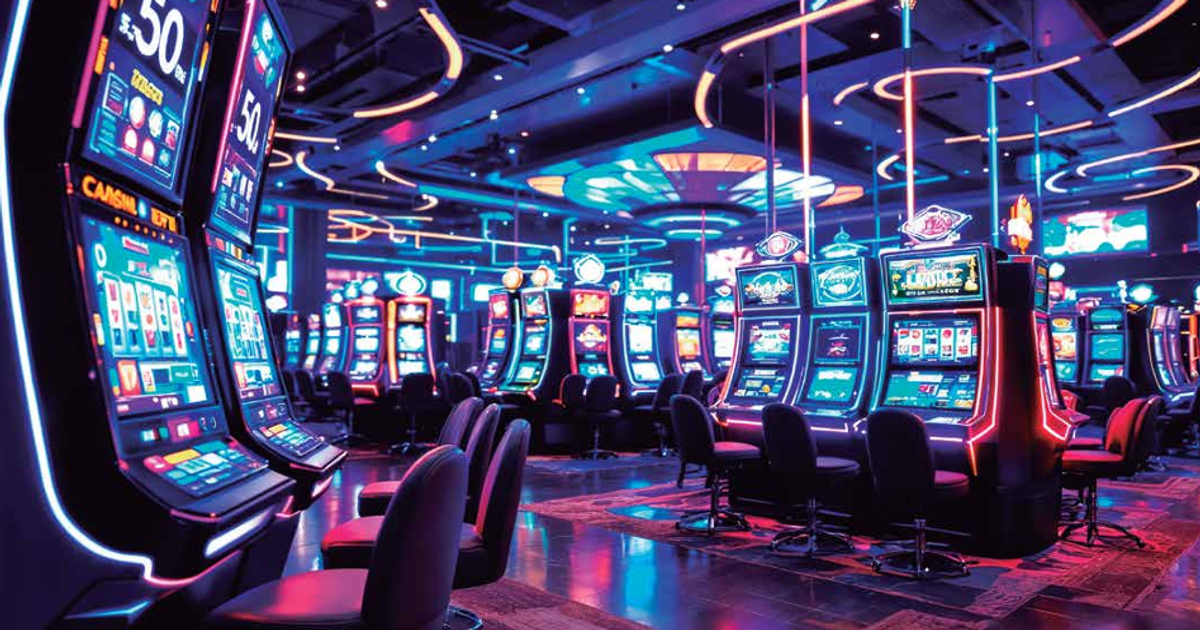
Máquinas, datos, inteligencia artificial y sistemas conectados están cambiando la forma en que los operadores gestionan el piso, conocen a sus clientes y toman decisiones en tiempo real.
Un jugador puede pasar horas frente a una máquina tragamonedas sin que, a simple vista, sea evidente todo lo que ocurre detrás de su pantalla. Cuánto tiempo lleva activa, cuándo recibió su última actualización, qué juegos registran mayor demanda, qué posición ocupa dentro del piso, cómo se comporta frente a otras máquinas o qué incidencias operativas ha presentado son datos que pueden quedar registrados en un sistema.
Cuando esa información se conecta con los datos de fidelización, pagos, mantenimiento, marketing y gestión del establecimiento, la lectura de una sala cambia.
El casino empieza a verse como una operación integrada, donde cada punto genera información que puede contribuir a la toma de decisiones.
Esta transformación lleva varios años en desarrollo, aunque durante mucho tiempo estuvo vinculada principalmente a la renovación del parque de máquinas. Hoy, la conversación tecnológica es mucho más amplia. Inteligencia artificial, analítica avanzada, sistemas de gestión, identificación biométrica, pagos cashless, automatización y herramientas de personalización ocupan espacios cada vez más relevantes dentro del gaming presencial.
La evolución ocurre mientras el negocio presencial mantiene un peso considerable. En Estados Unidos, el traditional gaming —que comprende los casinos físicos y sus juegos tradicionales— generó US$50,94 mil millones en 2025, un 2,3% más que el año anterior, según datos de la American Gaming Association.
La cifra pone la transformación en perspectiva: la tecnología no llega a un sector en retirada, sino a un negocio presencial que mantiene un alto nivel de actividad y busca operar con mayor precisión y eficiencia.
Del piso a los datos
Durante décadas, gran parte de la gestión de un casino dependió de la observación directa. El comportamiento de los clientes, el rendimiento de las máquinas, la ocupación de determinadas zonas y la respuesta a las promociones se interpretaban a partir de la experiencia de los equipos. Ese conocimiento sigue siendo relevante. Lo que ha cambiado es la cantidad de información disponible y la velocidad con la que puede analizarse.
Los sistemas de gestión actuales permiten monitorear máquinas, mesas, actividad de los jugadores, promociones y otras operaciones desde una infraestructura conectada. A partir de esos datos, las herramientas de analítica pueden mostrar el desempeño de la sala, comparar máquinas o zonas e identificar cambios en el comportamiento de los clientes.
El cambio tiene una consecuencia práctica: las decisiones pueden apoyarse cada vez más en información actualizada. Los operadores pueden identificar qué máquinas requieren atención, qué juegos muestran mejor desempeño, qué promociones generan mayor respuesta, qué segmentos de clientes están reaccionando y qué ubicaciones ofrecen mejores resultados.
La tecnología no necesariamente toma la decisión final. Su aporte está en acortar la distancia entre lo que ocurre en la sala, la información que genera y la acción que el operador puede tomar.
La IA llega al piso
La inteligencia artificial llegó al gaming presencial después de ganar protagonismo en áreas digitales como la recomendación, la segmentación y la personalización. Ahora comienza a trasladarse a funciones directamente relacionadas con la operación física.
Uno de sus principales campos de aplicación es la analítica del jugador. Los sistemas pueden procesar información sobre frecuencia de visita, preferencias de juego, respuesta a promociones y otros patrones de comportamiento para identificar cambios y oportunidades que podrían pasar inadvertidos en una revisión manual.
El objetivo es interpretar señales. Un jugador modifica su frecuencia de visita. Otro responde mejor a determinados juegos. Un segmento cambia su comportamiento después de una promoción. Una máquina presenta una caída de rendimiento. Una campaña alcanza determinado nivel de respuesta.
La IA puede cruzar grandes cantidades de variables y detectar relaciones entre ellas con mayor rapidez. Esto permite pasar de una lectura basada principalmente en datos históricos a otra capaz de identificar patrones y generar recomendaciones con información más actualizada.
El marketing es uno de los terrenos donde esta capacidad resulta especialmente visible. La tecnología puede ayudar a segmentar jugadores, personalizar comunicaciones, identificar el momento adecuado para una acción y medir su respuesta. Pero su aplicación no se limita a la relación con el cliente. También puede contribuir al monitoreo de equipos, la detección de anomalías, la previsión de mantenimiento y la optimización de recursos.
La siguiente frontera está relacionada con la automatización de esas respuestas. Un sistema puede identificar una oportunidad, recomendar una acción y, dependiendo del nivel de autonomía definido por el operador, activar determinados procesos.
El papel de los equipos también cambia. En lugar de dedicar tanto tiempo a revisar grandes volúmenes de información, pueden concentrarse en interpretar recomendaciones, establecer reglas, supervisar resultados y tomar las decisiones que requieren criterio humano.
Una experiencia cada vez más conectada
La modernización del casino también alcanza directamente a los slots. La máquina sigue siendo el principal punto de contacto con el jugador, pero detrás existe una infraestructura capaz de gestionar contenidos, configuraciones, actualizaciones y rendimiento.
Las máquinas pueden conectarse con sistemas de gestión, programas de fidelización, herramientas de analítica y soluciones de pago. De esta manera, dejan de funcionar como unidades aisladas y pasan a formar parte de una operación conectada.
La personalización también está llegando a los espacios físicos. Sistemas de identificación, herramientas móviles y soluciones basadas en inteligencia artificial pueden reconocer patrones de comporta miento, facilitar beneficios y reducir la necesidad de utilizar tarjetas físicas en determinadas interacciones.
El principio es sencillo: la tecnología funciona mejor cuando el jugador apenas nota que está ahí. Esa lógica también se aplica a los kioscos de autoservicio, el check-in digital, la atención automatizada y otras herramientas diseñadas para reducir esperas y simplificar procesos. Mientras algunas tareas se resuelven de forma autónoma, los equipos pueden concentrarse en aquellas interacciones que requieren atención humana.
En definitiva, la transformación no busca llenar el casino de tecnología visible, sino hacer que la operación funcione mejor sin interponerse en la experiencia. El avance tecnológico será más relevante cuando el jugador simplemente note que todo resulta más fácil.
The new intelligence of the casino
Machines, data, artificial intelligence and connected systems are changing the way operators manage the gaming floor, understand their customers and make decisions in real time.
A player can sit in front of a slot machine for hours without making it immediately apparent how much is happening behind its screen. How long it has been active, when it last received an update, which games are in greatest demand, where it is positioned on the floor, how it performs compared with other machines, or what operational issues it has experienced are all data points that can be recorded by a system.
When that information is connected with loyalty, payments, maintenance, marketing and property-management data, the way a casino floor is viewed changes.
The casino begins to look like an integrated operation, where every touchpoint generates information that can contribute to decision-making.
This transformation has been developing for several years, although for a long time it was primarily associated with the modernization of the slot-machine floor. Today, the technology conversation is much broader. Artificial intelligence, advanced analytics, management systems, biometric identification, cashless payments, automation and personalization tools are taking on increasingly important roles within land-based gaming.
This evolution is taking place while the land-based business continues to carry considerable weight. In the United States, traditional gaming—which includes land-based casinos and their traditional casino games—generated US$50.94 billion in 2025, up 2.3% from the previous year, according to data from the American Gaming Association.
The figure puts the transformation into perspective: technology is not entering a sector in decline, but rather a land-based business that continues to operate at significant scale and is seeking to run with greater precision and efficiency.
From the floor to the data
For decades, much of casino management relied on direct observation. Customer behavior, machine performance, occupancy in specific areas and responses to promotions were interpreted largely through the experience and judgment of casino teams.
When that information is connected with loyalty, payments, maintenance, marketing and property-management data, the way a casino floor is viewed changes.
The casino begins to look like an integrated operation, where every touchpoint generates information that can contribute to decision-making.
That knowledge remains relevant. What has changed is the amount of information available and the speed at which it can be analyzed.
Today’s management systems can monitor machines, table games, player activity, promotions and other operations through a connected infrastructure. Based on that data, analytics tools can provide a view of floor performance, compare machines or areas, and identify changes in customer behavior.
The practical consequence is significant: decisions can increasingly be supported by up-to-date information. Operators can identify which machines require attention, which games are performing best, which promotions generate the strongest response, which customer segments are reacting, and which locations are delivering better results.
Technology does not necessarily make the final decision. Its value lies in shortening the distance between what is happening on the floor, the information being generated and the action an operator can take.
AI hits the floor
Artificial intelligence entered land-based gaming after gaining prominence in digital areas such as recommendation engines, segmentation and personalization. It is now beginning to move into functions directly connected to the physical operation.
One of its key application areas is player analytics. Systems can process information on visit frequency, gaming preferences, responses to promotions and other behavioral patterns to identify changes and opportunities that might go unnoticed through manual analysis.
The objective is to interpret signals. One player changes their visit frequency. Another responds better to certain games. A segment changes its behavior following a promotion. A machine experiences a decline in performance. A campaign reaches a particular response level.
AI can cross-reference large numbers of variables and identify relationships between them more rapidly. This makes it possible to move from an approach based primarily on historical data toward one capable of identifying patterns and generating recommendations using more current information.
Marketing is one of the areas where this capability is particularly visible. Technology can help seg ment players, personalize commu nications, identify the right moment to take action and measure the re sponse. But its application is not limited to customer relationships. It can also contribute to equip ment monitoring, anomaly detec tion, predictive maintenance and resource optimization.
The next frontier involves auto mating those responses. A system can identify an opportunity, recommend an action and, depending on the level of autonomy defined by the operator, trigger specific processes.
The role of casino teams also changes. Instead of spending as much time reviewing large volumes of information, employees can fo cus on interpreting recommenda tions, setting rules, monitoring out comes and making decisions that require human judgment.
An increasingly connected experience
Casino modernization also reaches directly into the slot floor. The machine remains the player’s primary point of contact, but be hind it is an infrastructure capable of managing content, configurations, updates and performance.
Machines can connect with man agement systems, loyalty programs, analytics tools and payment solu tions. As a result, they no longer op erate as isolated units but become part of a connected operation.
Personalization is also reaching physical casino environments. Iden tification systems, mobile tools and AI-powered solutions can recognize behavioral patterns, facilitate bene fits and reduce the need for physical loyalty cards in certain interactions.
The principle is simple: technology works best when the player barely notices it is there.
The same logic applies to self service kiosks, digital check-in, automated customer service and other tools designed to reduce waiting times and simplify pro cesses. While some tasks can be handled autonomously, casino teams can focus on interactions that require human attention.
Ultimately, the transformation is not about filling the casino with vis ible technology, but about making the operation work better without getting in the way of the experience. Technological progress will be most meaningful when the player simply notices that everything feels easier.