














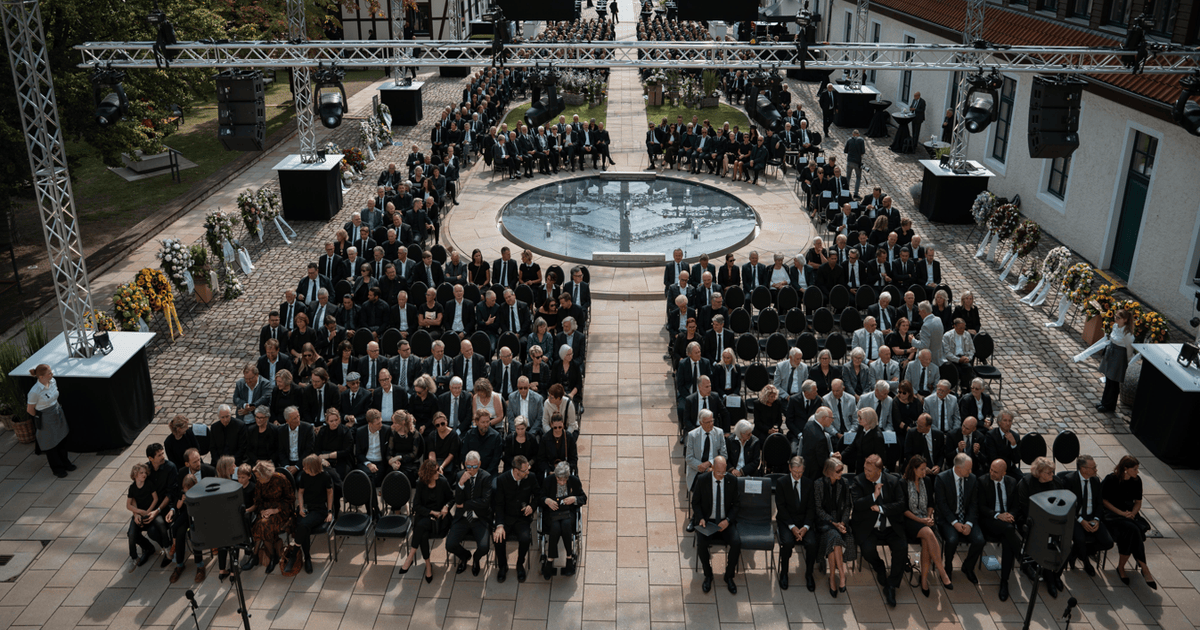
Espelkamp. Más de 600 invitados despidieron a Paul Gauselmann en el Castillo de Benkhausen. Además de familiares, amigos y compañeros, asistieron numerosos representantes de la política, los negocios, la industria, así como de clubes y asociaciones, y empleados de Merkur Group. El patio decorado con flores, coronas, banderas de luto y retratos de Paul Gauselmann enmarcó el servicio conmemorativo. Para que el personal del grupo pudiera seguir la ceremonia, esta se transmitió en directo. Paul Gauselmann falleció el 21 de agosto, poco antes de cumplir 92 años. Fundó el Grupo Merkur como una empresa unipersonal y, durante 67 años al frente, lo convirtió en un grupo de éxito internacional con más de 15.000 empleados.
Los oradores elogiaron la trayectoria empresarial de Paul Gauselmann, su compromiso social y su influencia en muchas personas. Recordaron su apoyo a hospitales, escuelas, jardines de infancia, bomberos y clubes de la región. Asimismo, lo describieron como una persona que sabía escuchar, que respetaba a los demás, que inspiraba y que contribuía a moldear su entorno. De este modo, se hicieron visibles sus diferentes facetas: el hombre de familia, el empresario, la figura política activa, el benefactor regional, el compañero de tenis y el jugador de Doppelkopf.
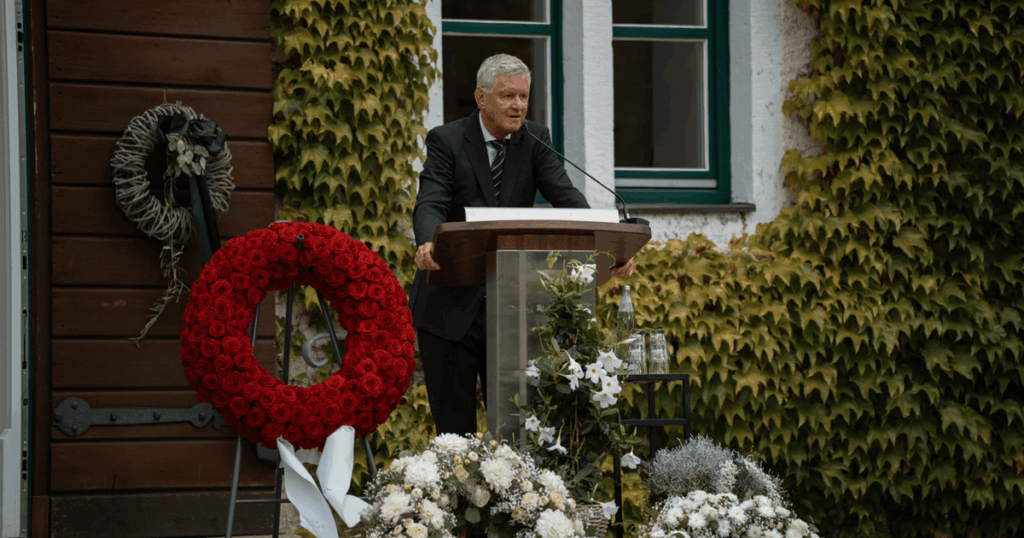
La inauguración estuvo a cargo de Michael Gauselmann. El presidente del consejo de supervisión del Grupo Merkur compartió reflexiones personales sobre su relación con su padre. Describió cómo Paul Gauselmann asumía diferentes roles según la situación, desde hombre de familia hasta empresario. Una de las lecciones de su padre permaneció especialmente presente: «Solo una idea que se lleva a cabo es una buena idea», afirmó Michael Gauselmann. Años después, repitió esta frase en numerosas conversaciones con sus empleados. «No hablar, sino actuar», resumió Michael Gauselmann el mensaje que su padre le transmitió.
Manfred Stoffers, vicepresidente del Consejo de Administración del Grupo Merkur y uno de los confidentes más cercanos de Paul Gauselmann, moderó el servicio conmemorativo. Recordó cómo conoció al fallecido hace 42 años, dirigió la ceremonia y presentó a los oradores con anécdotas personales.
Lars Felderhoff contextualizó el logro empresarial de Paul Gauselmann. El portavoz del Grupo Merkur afirmó que la empresa no existiría sin su valentía, dedicación y tenacidad, y lo elogió como un «brillante inventor, visionario y diseñador». También destacó su energía e inquietud: «El estancamiento no era una opción». Al mismo tiempo, Felderhoff subrayó que el éxito de «PG», como se le conocía respetuosamente, no solo se reflejaba en las cifras, sino también en las personas que formó.
Paul Gauselmann era también una persona políticamente comprometida y franca que buscaba el diálogo. Para Manfred Stoffers, era un «luchador por la libertad», y Hermann Otto Solms, exvicepresidente del Bundestag y miembro veterano del FDP en dicho parlamento, habló de décadas de intercambio y simpatía mutua. «Paul Gauselmann siempre quiso sacar a la industria de la zona gris», afirmó el presidente honorario del FDP. Georg Stecker, portavoz de la industria alemana de máquinas recreativas, también destacó sus contribuciones. «Nadie logró tanto para la industria», subrayó Stecker. «Era un entusiasta de la tecnología y un hombre de acción».
La condolencia del gobierno del estado de Renania del Norte-Westfalia fue expresada por Anna Katharina Bölling, presidenta del distrito administrativo de Detmold: «Renania del Norte-Westfalia ha perdido a un empresario visionario». Prácticamente no había hospital, escuela, jardín de infancia o club en la región que no se hubiera beneficiado de su generosidad. Los encuentros con el empresario siempre eran especiales para ella. «No solo era un buen orador, sino también un buen oyente. Pocas personas tienen esa cualidad».
Ali Doğan, administrador del distrito de Minden-Lübbecke, también destacó el compromiso de Paul Gauselmann con la comunidad. «Paul Gauselmann fue un verdadero pilar de la sociedad». En particular, la clínica Mühlenkreiskliniken recibió apoyo financiero en repetidas ocasiones. La devoción del fallecido por su tierra natal fue enfatizada por el alcalde de Espelkamp, Dr. Henning Vieker, y el alcalde de Lübbecke, Philipp Knappmeyer. Paul Gauselmann era ciudadano honorario de ambas ciudades y, en vida, donó a Espelkamp más de 8,7 millones de euros y a Lübbecke más de cinco millones de euros. Ambos alcaldes subrayaron que Paul Gauselmann siempre se consideró parte de la comunidad y participaba activamente en el mercado semanal y otras fiestas de la ciudad.
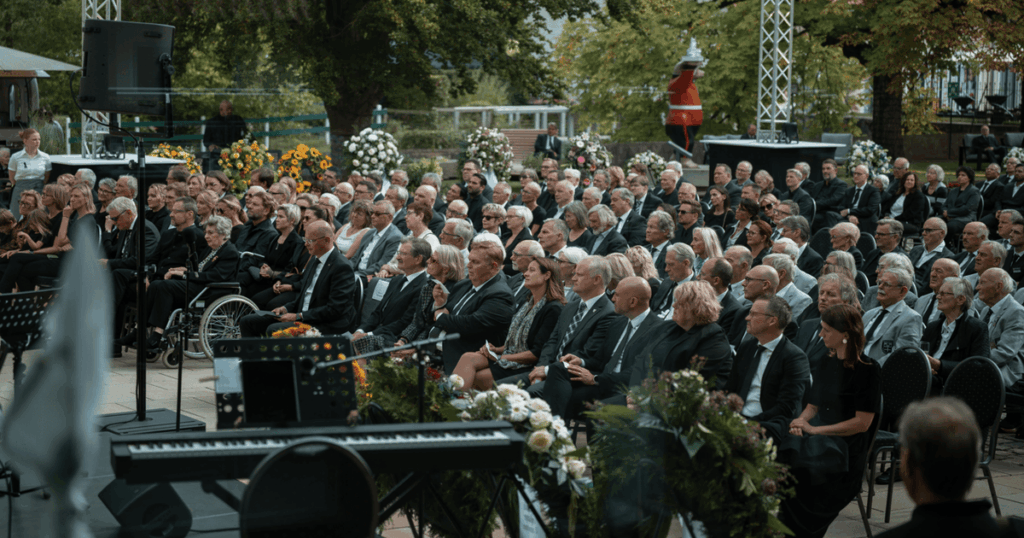
Como parte de una comunidad, Erhard Schiffner y Arthur Plate también conocían al fallecido. Erhard Schiffner, capitán del equipo masculino de 75 años de Espelkamp-Mittwald, del que Paul Gauselmann también formaba parte, habló de su pasión por el tenis y su espíritu de equipo. Mientras pudo, Paul Gauselmann jugaba regularmente al tenis y pasaba tiempo con sus compañeros. Esta conexión también fue descrita por Arthur Plate, quien veía a Paul Gauselmann una vez al mes durante sus rondas del torneo Doppelkopf. «Su agenda siempre estaba organizada teniendo en cuenta el tenis y el Doppelkopf», recordó Plate. «Y así se forjaron verdaderas amistades».
Esta faceta privada de Paul Gauselmann demostraba que, además de su ética de trabajo y ambición, también disfrutaba del juego, que ocupaba un lugar fundamental en su vida. O como lo expresó Manfred Stoffers: «Paul Gauselmann no solo era un gran creador de juegos, sino también un jugador apasionado».
Moving Farewell to Paul Gauselmann at Benkhausen Castle
Around 600 Guests Pay the Final Hommage to the Expectional Entrepeneur
Espelkamp. More than 600 invited guests bid farewell to Paul Gauselmann at Benkhausen Castle. In addition to family members, friends and companions, numerous representatives from politics, business, the industry, as well as clubs and associations were present, as were employees of the Merkur Group. The decorated courtyard with flowers, wreaths, mourning flags, and portraits of Paul Gauselmann framed the memorial service. To allow the staff of the group to follow the ceremony, it was streamed live. Paul Gauselmann passed away on August 21—shortly before his 92nd birthday. He founded the Merkur Group as a one-man operation and, over 67 years at the helm, developed it into an internationally successful group with currently more than 15,000 employees.
The speakers praised Paul Gauselmann’s entrepreneurial life achievement, his social engagement, and his impact on many people. They recalled his support for hospitals, schools, kindergartens, fire brigades, and clubs in the region. At the same time, they described him as a person who listened, took others seriously, gave impulses, and shaped his environment. Thus, different facets became visible: the family man, the entrepreneur, the politically active figure, the regional supporter, the tennis partner, and the Doppelkopf player.
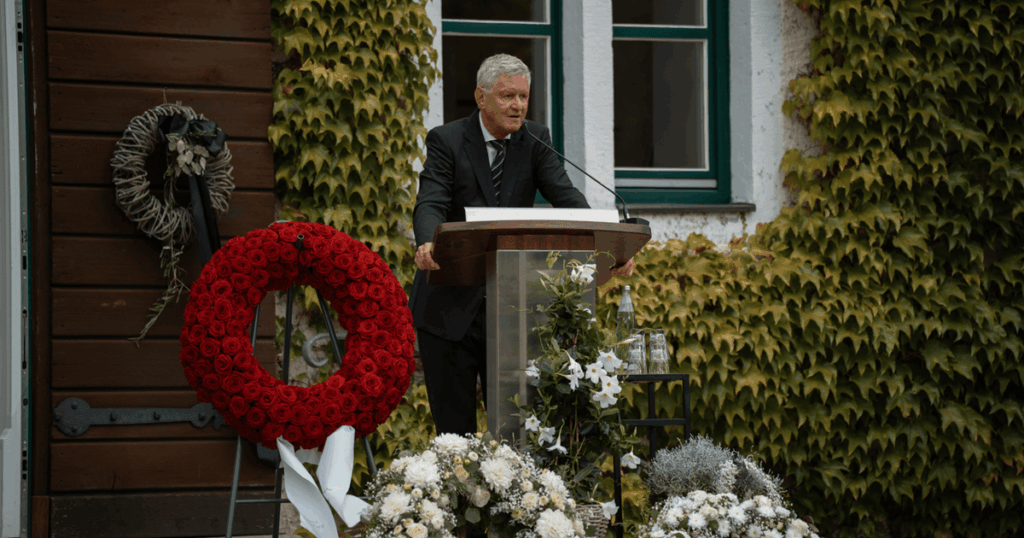
The opening was made by Michael Gauselmann. The chairman of the supervisory board of the Merkur Group gave personal insights into his relationship with his father. He described how Paul Gauselmann took on different roles depending on the situation—from family man to entrepreneur. One of his father’s lessons remained especially memorable: «Only an idea that is implemented is a good idea,» Michael Gauselmann reported. He had repeated this sentence in many conversations with employees years later. «Not talking, but doing,» summed up Michael Gauselmann the message his father gave to his son.
As one of Paul Gauselmann’s closest confidants, Manfred Stoffers, Vice Chairman of the Management Board of the Merkur Group, moderated the memorial service. He recounted how he met the deceased 42 years ago, guided the ceremony, and introduced the speakers with personal anecdotes.
Lars Felderhoff placed Paul Gauselmann’s entrepreneurial achievement in context. The spokesperson for the Merkur Group stated that the company would not exist without his courage, dedication, and tenacity, and praised him as a «brilliant tinkerer, visionary, and designer.» He also highlighted his energy and restlessness: «Stagnation was not an option.» At the same time, Felderhoff emphasized that the success of «PG,» as he was respectfully called, could not only be read in numbers but «also in the people he shaped.»
Paul Gauselmann was also a politically interested and outspoken person who sought dialogue. For Manfred Stoffers, he was a «fighter for freedom,» and Hermann Otto Solms, former Vice President of the Bundestag and long-time FDP member of the Bundestag, spoke of decades of exchange and mutual sympathy. «Paul Gauselmann always wanted to bring the industry out of the gray area,» said the FDP honorary chairman. Georg Stecker, spokesman for the German arcade industry, also highlighted his contributions. «No one achieved so much for the industry,» Stecker emphasized. «He was a tech enthusiast and a doer.»
The participation of the North Rhine-Westphalia state government was conveyed by Anna Katharina Bölling, President of the Detmold administrative district: «North Rhine-Westphalia has lost a visionary entrepreneur.» There had hardly been a hospital, a school, a kindergarten, or a club in the region that did not benefit from his generosity. Meetings with the entrepreneur were always special for her. «He was not only a good speaker but also a good listener. Not many people have that.»
Ali Doğan, district administrator of the Minden-Lübbecke district, also highlighted Paul Gauselmann’s commitment to the community. «Paul Gauselmann was a true pillar of society.» In particular, the Mühlenkreiskliniken repeatedly received financial support. The deceased’s devotion to his homeland was emphasized by Espelkamp’s mayor Dr. Henning Vieker and Lübbecke’s mayor Philipp Knappmeyer. Paul Gauselmann was an honorary citizen of both towns and had endowed Espelkamp in his lifetime with a donation of over 8.7 million euros and Lübbecke with a grant of over five million euros. Both mayors stressed that Paul Gauselmann always saw himself as part of the community and naturally attended the weekly market or other city festivals.
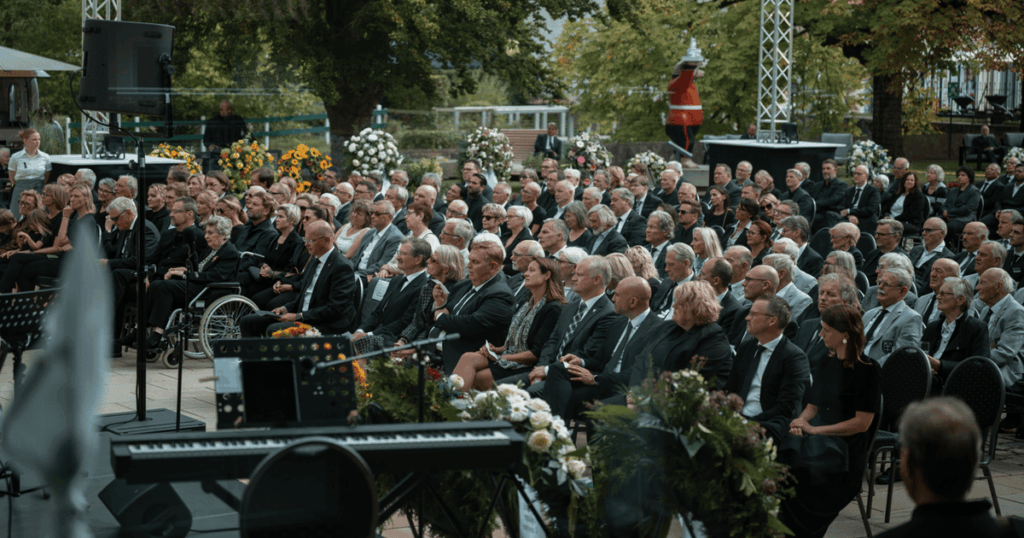
As part of a community, Erhard Schiffner and Arthur Plate had also known the deceased. Erhard Schiffner, captain of the Espelkamp-Mittwald men’s 75 team, of which Paul Gauselmann was also a member, spoke of his tennis passion and team spirit. As long as he could, Paul Gauselmann regularly played on the tennis court and spent time with his teammates. This connection was also described by Arthur Plate, who experienced Paul Gauselmann once a month as part of his Doppelkopf rounds. «His schedule was always arranged with tennis and Doppelkopf in mind,» Plate recalled. «And true friendships were formed.»
This private facet of Paul Gauselmann showed that, alongside work ethic and ambition, there was also joy in the game that held a fixed place in his life. Or as Manfred Stoffers put it: «Paul Gauselmann was not only a great game-maker, but also a passionate player himself.»